The Harte–Fairley generational love motif
A Woman of SubstanceThe Harte–Fairley generational love motif is the novel’s pattern of three Fairley men falling in love with Harte women, with the first two relationships thwarted before the third can succeed. It turns a private family history into a force shaping Emma Harte’s loyalties and vendetta: what can look like a hereditary curse is also a record of choices made under class pressure, fear, and resentment. Its resolution comes when Emma recognizes that she can stop passing the old conflict to the next generation by allowing Paula and Jim to marry.
The First Two Generations
The earliest romance was between Elizabeth Harte and Adam Fairley, whose relationship Jim later describes to Emma through a story passed down by his grandfather. Adam’s father had kept a painted stone portrait of Elizabeth, and Jim explains that it was more than a keepsake: Elizabeth and Adam had been lovers. Elizabeth became pregnant, left Fairley, and was found by Adam in Ripon several weeks later. Adam had decided to abandon his military career, defy his father, and emigrate to America with her. By then Elizabeth had miscarried and was gravely ill; whether the miscarriage was natural or caused by an unqualified midwife remained unknown. She would not agree to elope. After recovering, she returned to Fairley and soon married Jack Harte, never speaking to Adam again.
The next generation repeated the separation in a different form. Emma and Edwin Fairley loved one another, but their relationship met the same class boundary that had helped defeat their parents. When Emma told Edwin she was pregnant, he considered marriage but remained silent, fearing his father’s anger, the loss of financial support, and the damage to his prospects of studying at Cambridge and becoming a barrister. He saw Emma as a village girl and a servant, and decided that the gulf between them could not be crossed. Emma understood his silence as renunciation. She refused to seek a doctor to end the pregnancy and told him, with bitter clarity, that he was not prepared to marry her. His failure to claim her became a decision he would regret for the rest of his life.
These two histories are not identical, but their echoes are deliberate: love is present, and a shared future is imaginable, yet family status and anticipated consequences intervene. The first generation is separated by Elizabeth’s illness, refusal, and subsequent marriage; the second by Edwin’s fear and Emma’s rejection of the future his silence offered. Neither romance can repair the loss after the decisive choice has been made.
A Family History Made into a Feud
The thwarted romances become more than private grief because they are carried forward as family memory and resentment. At fourteen, Emma began to experience the Fairleys as a source of pain. The story of Adam and Elizabeth’s love was not fully known to her, but when Jim eventually revealed it, Emma recognized that she had long suspected some bond between them. She could not explain how that suspicion had formed, yet she understood that her hatred of Adam Fairley had been bound up with the buried history of her mother’s loss.
The pattern is given the language of a curse when Jim recounts Adam’s deathbed message. Adam had told Jim that Harte women held a fatal fascination for Fairley men, but that the couples had always been crossed in love, doomed by circumstances of birth. He asked that the pattern end and that Emma allow the current generation the happiness denied to both Elizabeth and Adam and to Emma and Edwin. The phrase makes inherited misfortune sound inevitable; the history behind it, however, shows human decisions at work. The class division that Edwin treated as impassable and the family opposition Adam had once prepared to defy were not supernatural forces. They became enduring barriers because people yielded to them or refused to cross them.
Emma’s own response helped preserve the feud. Her bitterness against the Fairleys shaped how she viewed their descendants, and she had tried to keep her children away from the family’s orbit. At Pennistone Royal, she acknowledges to Paula that the Fairleys had brought her pain since she was fourteen and admits that she had not thought to protect her grandchildren from the same history. The admission marks a change in how she understands her role: protecting the next generation need not mean keeping it apart from every Fairley.
Paula and Jim: Breaking the Pattern
Paula and Jim are the third pair in the sequence, and their relationship gives the old motif a possible ending rather than another repetition. Emma had initially opposed them, but she reverses her decision, recognizing that her pride and the bitterness of an old woman should not stand in the way of Paula’s future. She tells Paula that her happiness matters more than anything and accepts that Jim may bring joy where earlier Fairleys brought pain. The reversal is significant because it is Emma, not fate, who can either renew or interrupt the inherited division.
Jim’s employment with Emma’s newspaper company had already brought him into her professional world. When he applied for a position, Emma was thrown off balance by his identity, but curiosity overcame prejudice. She judged him the strongest candidate and hired him; she also admits that the thought of a Fairley working for her gave her some satisfaction. Their eventual meeting through Paula had not been something Emma anticipated. The professional relationship therefore precedes her recognition that Jim’s place in her family may be determined not by the old feud but by what she chooses to permit.
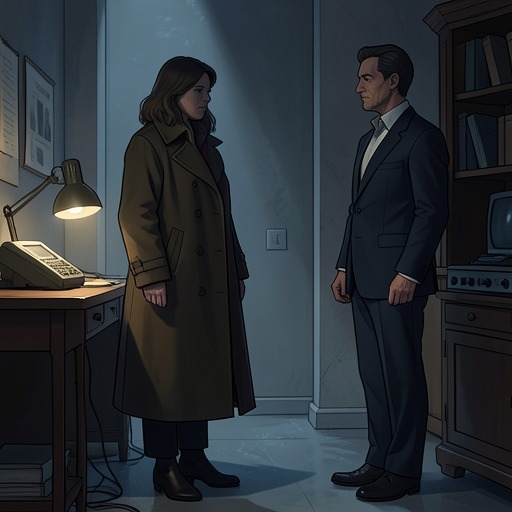
The family history becomes explicit when Jim gives Emma the stone portrait and tells her what his grandfather had confided to him. Emma listens to the account of Elizabeth and Adam, then to the plea that she end the pattern. Jim also delivers Adam’s request for forgiveness: Adam had never stopped loving Emma and had lived with remorse over rejecting her in the rose garden. He believed that his repudiation had cost his life its meaning and asked Emma to forgive the Fairleys, especially him. Emma is moved by the revelation and says she is glad Jim told her. She reflects that the three thwarted romances have spanned almost a hundred years and agrees that the heartbreak must end.
Resolution and Significance
The ending is a reconciliation rather than a reversal of the past. Emma cannot restore Elizabeth and Adam’s lost future, or undo the years of separation between herself and Edwin. But she can refuse to make Paula and Jim bear the same inheritance. Her decision joins the families through the next generation and changes the meaning of the earlier romances: they remain losses, but no longer dictate what must happen afterward.
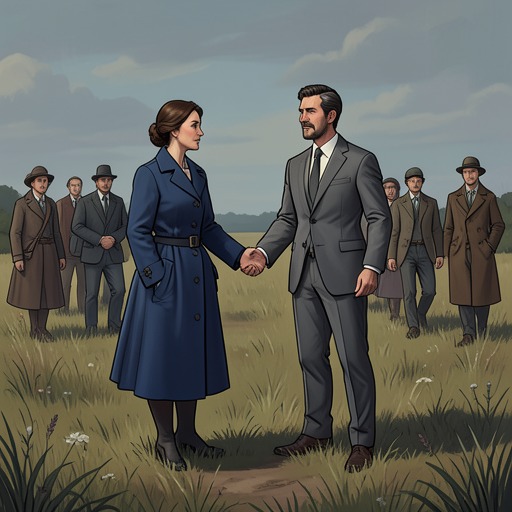
Blackie recognizes the change as the end of Emma’s vendetta and says that she has united the two families at last. Paula will become a Fairley, a prospect Emma now welcomes; she imagines future Fairley great-grandchildren and says that Paula and Jim are the future. The motif thus closes not with a claim that the old pain has vanished, but with a choice that prevents it from governing the next relationship. Across three generations, the story moves from hidden love and separation, through Emma’s personal rejection and long resentment, to a marriage she freely permits. What appeared to be a curse proves breakable when inherited bitterness gives way to the younger couple’s happiness.